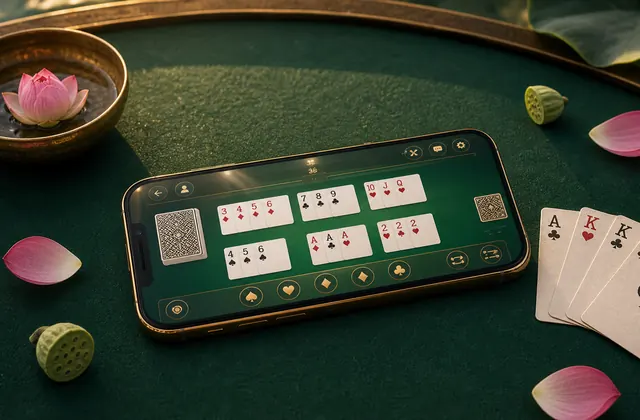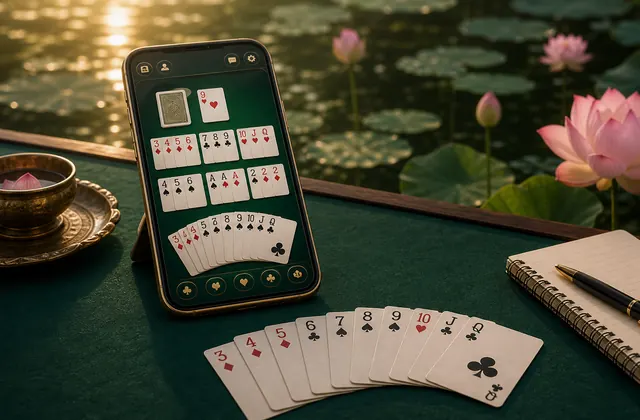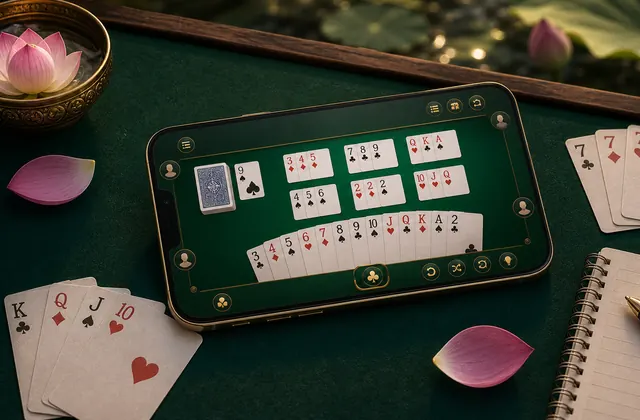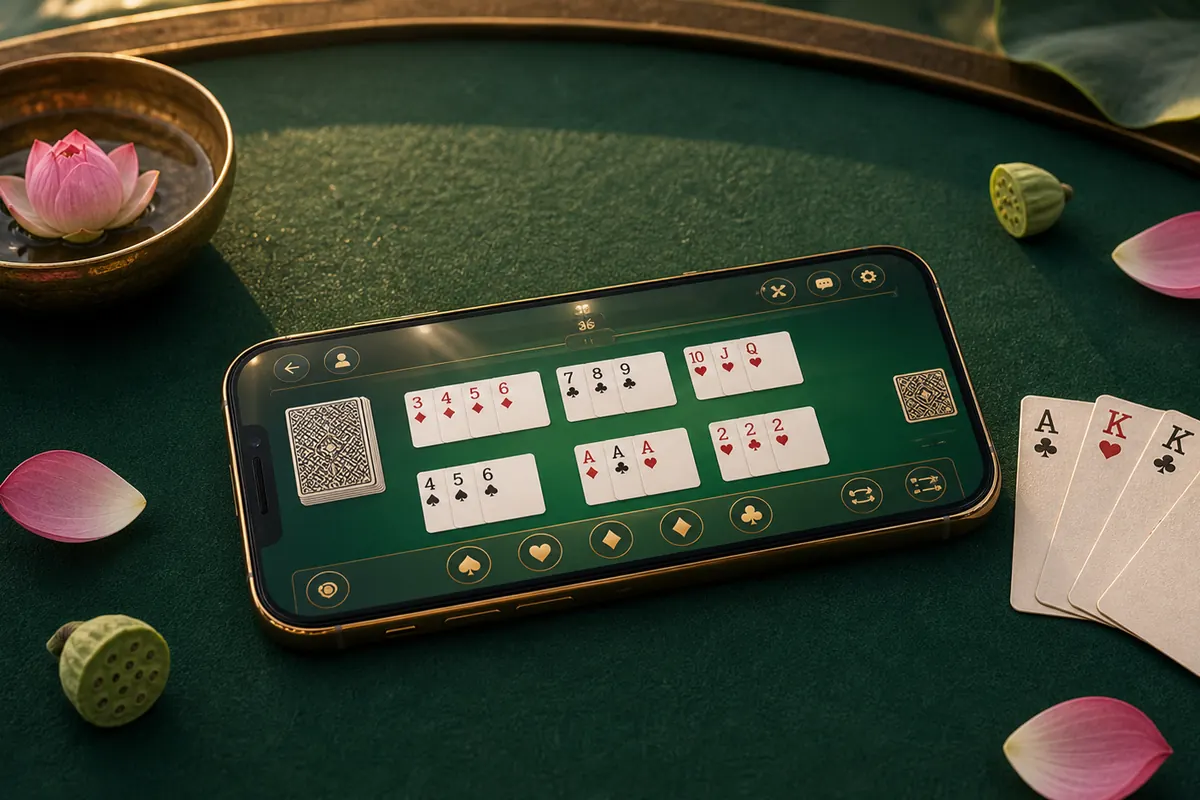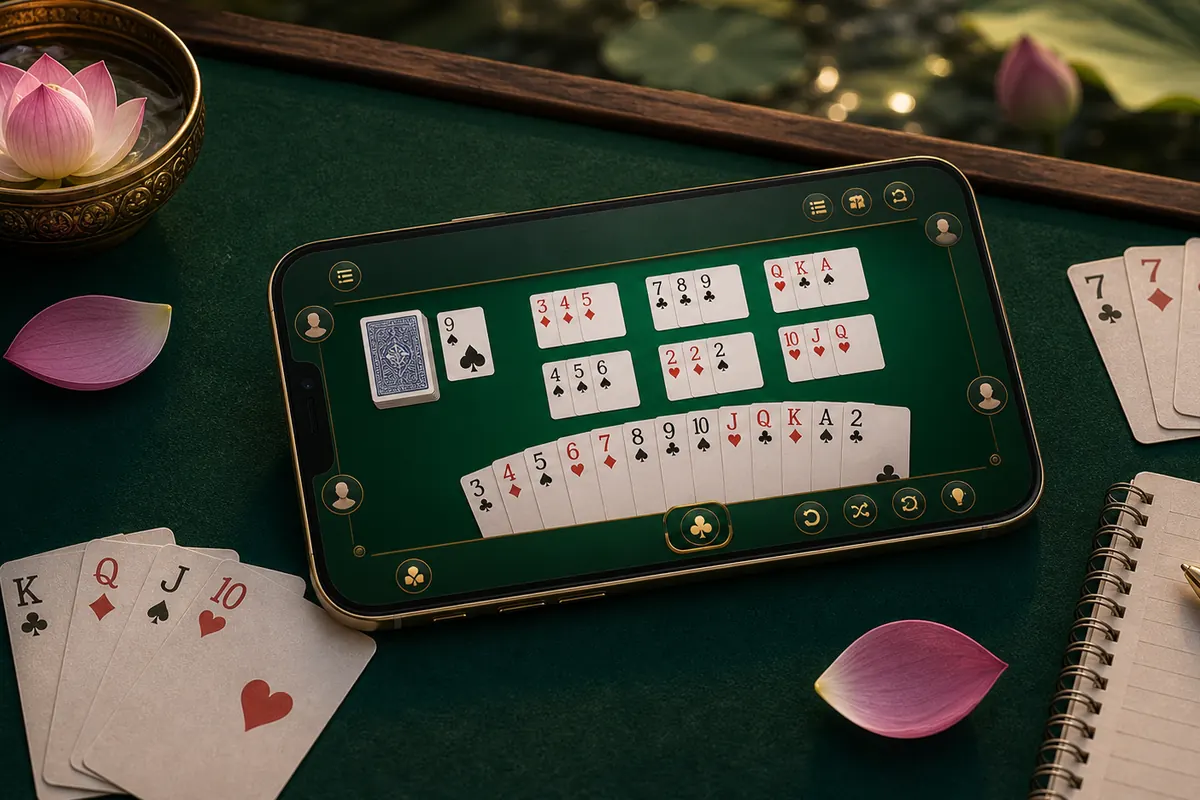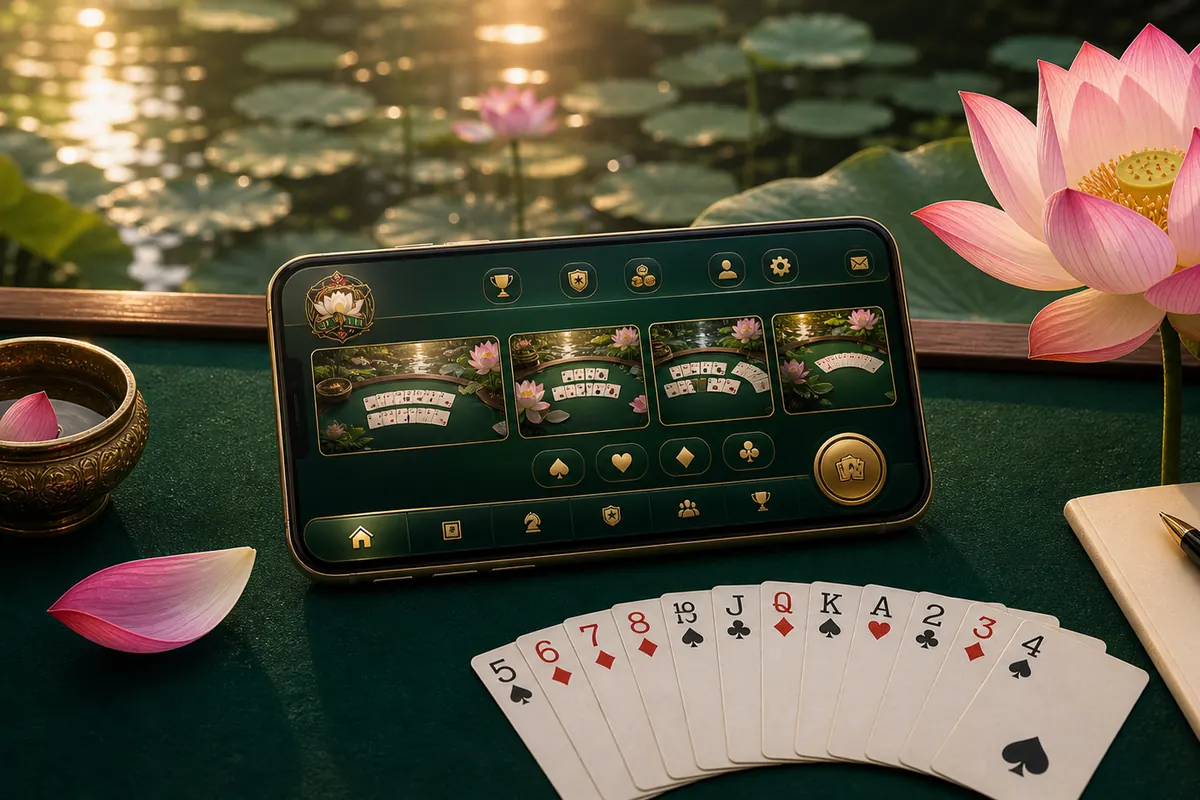
Complete hand example
Can all 13 cards be sequences in Yono Rummy?
Yes—four valid runs can cover the whole hand without a set.
Direct answer
Yes. A standard 13-card Indian Rummy hand can be declared with only sequences and no set. Every card must belong to a valid run, the hand must contain at least two sequences, and at least one must be pure. A practical 13-card split is 4 + 3 + 3 + 3 cards across four non-overlapping sequences.
A complete 4 + 3 + 3 + 3 hand
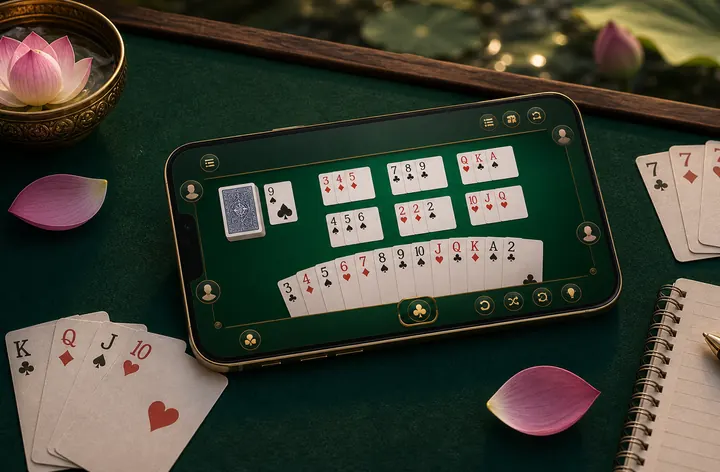
The following 13 cards form four pure sequences. Each lane is a separate group; together they account for every card exactly once.
Audit the example rather than memorising it
- Total cards
- 4 + 3 + 3 + 3 = 13, so no card is missing or left loose.
- Sequence count
- Four valid sequences, which is more than the usual minimum of two.
- Pure requirement
- All four are pure because no Joker substitutes for a natural card.
- Set count
- Zero. That is allowed because valid sequences cover the remaining cards.
Do not copy the ranks mechanically. A different deal can use one four-card run and three other runs, or another grouping that totals 13. What matters is that every lane passes the same-suit and consecutive-rank test.
Mistakes that break an all-sequence hand
- Counting a two-card pair as a completed sequence.
- Mixing suits inside one lane, such as 7♦-8♣-9♦.
- Using K-A-2 as a wrap-around run.
- Counting one physical card in two sequences.
- Leaving one unmatched card outside the four groups.
- Using Jokers in every sequence so no pure sequence remains.
Rebuild this exact example in the Play & Learn room, then replace one card at a time and state which rule changes. That exercise is more useful than memorising a screenshot.
Sources and rule scope
- Pagat: Indian Rummy sequence, set and declaration rules.
- PureRummy: valid declaration requires two sequences including one pure; no set is compulsory.
This hand follows common 13-card Indian Rummy. A specific app may display different Joker handling or group validation, so read its visible house rules. YonoGameGuide is an independent learning resource, not YONO SBI banking or a cash service.
All-sequence hand FAQ
Do all four sequences have to be pure?
No. At least one must be pure under the common rule, while the second and additional sequences may be valid impure runs.
Can three sequences cover all 13 cards?
Yes in a valid split such as 5 + 4 + 4, provided every group is a sequence and the pure requirement is met.
 Open learning guide